
Written by Adventure Planning Expert Lisette
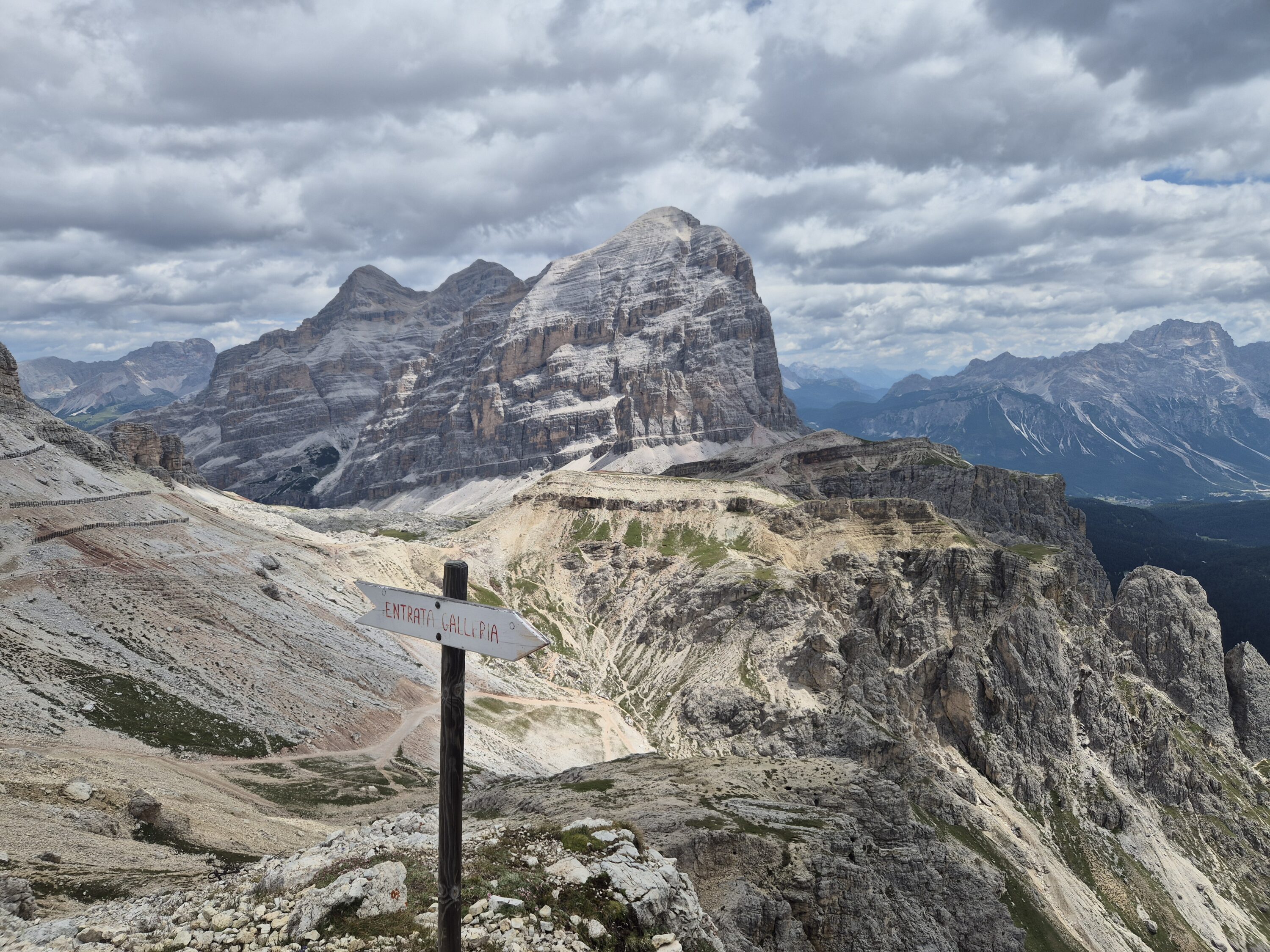
Have you ever wondered what the Alta Via 1 would be like if you included the via ferratas? Not just hiking beneath the huge limestone walls of the Dolomites, but clipping into the cables, following old military routes and seeing parts of the mountains that most Alta Via 1 hikers simply pass by?
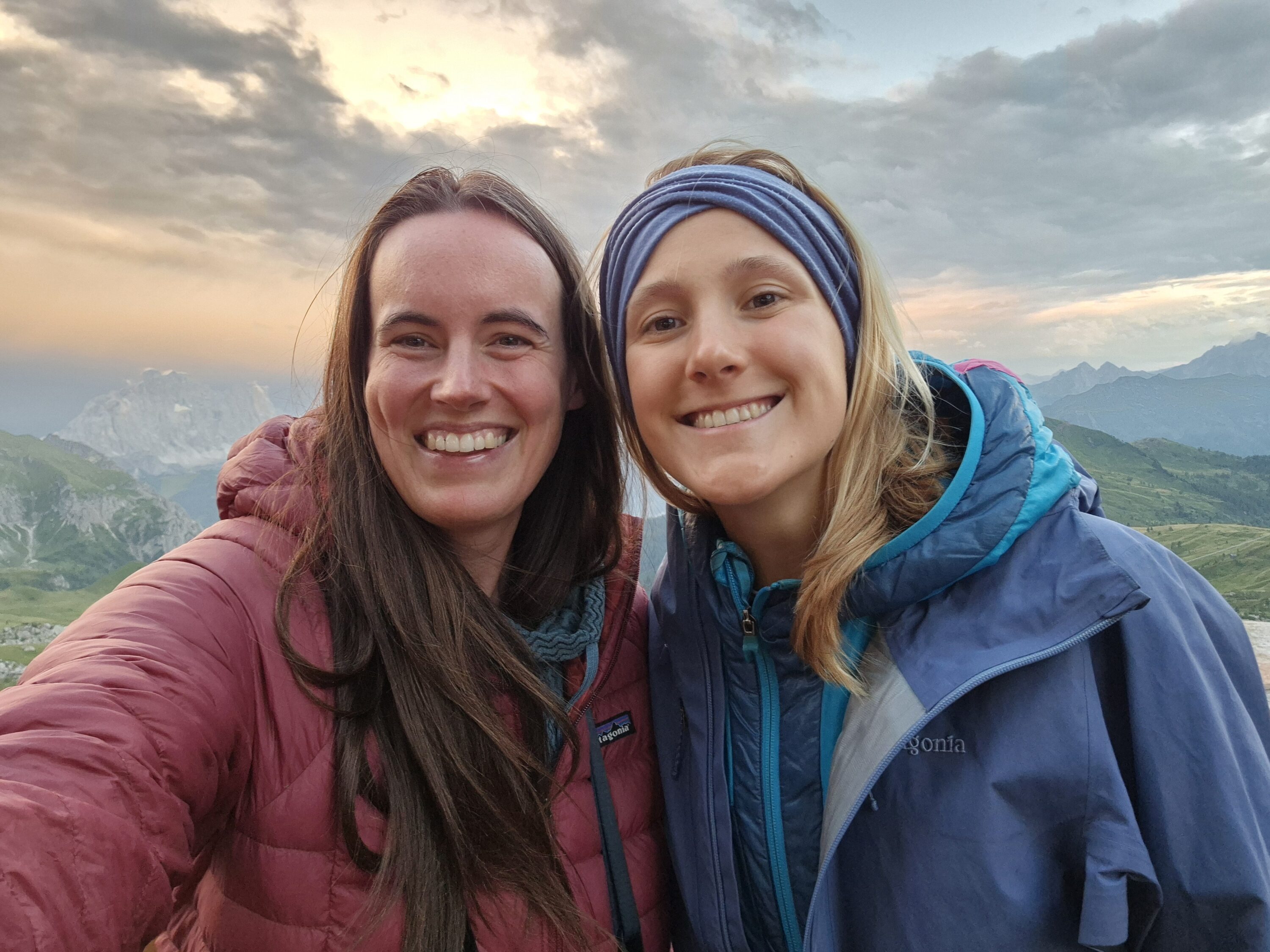
That was exactly the idea behind our Alta Via 1 with Via Ferratas itinerary. My friend Anna and I had the chance to hike it ourselves, combining one of the best-known hut-to-hut trails in the Dolomites with a selection of via ferratas along and close to the route. The result felt familiar and completely different at the same time: the classic Alta Via 1 scenery, rifugios and food, but with more exposed terrain, summit detours, World War I history and a much wilder finish all the way to Belluno.
The standard Alta Via 1 can be hiked without via ferrata equipment by using the normal hiking route and bypassing technical variants. This version is different. It is designed for fit, experienced hikers who already have via ferrata or alpine climbing experience, are comfortable with exposure and can make independent decisions about weather, conditions and when to turn around. If that sounds like you, this is a very special way to experience the Dolomites.
Why combine the Alta Via 1 and via ferrata?
One of the biggest appeals of the Alta Via 1 is its variety. Over the course of the journey you move from the German-speaking northern Dolomites into the Italian-speaking south. The food gradually shifts from Knödel to polenta, the accommodation from comfortable mountain lodges to more rustic backcountry rifugios, and the landscape from high alpine meadows to increasingly wild limestone terrain.
Adding via ferratas gives you another layer. Instead of only looking up at the rock towers, you sometimes climb onto them. You visit old wartime positions, cross protected sections, reach summits that sit just off the main trail and experience quieter corners that many AV1 hikers never see. It also changes how you have to think. A via ferrata day is not simply another hiking day. Weather, especially thunderstorms, matters enormously; so do route conditions, fatigue and your own technical ability. On our trip we changed plans more than once. That was not a disappointment. It was simply part of travelling independently in the mountains.
Day 1: Lago di Braies and straight into the Dolomites
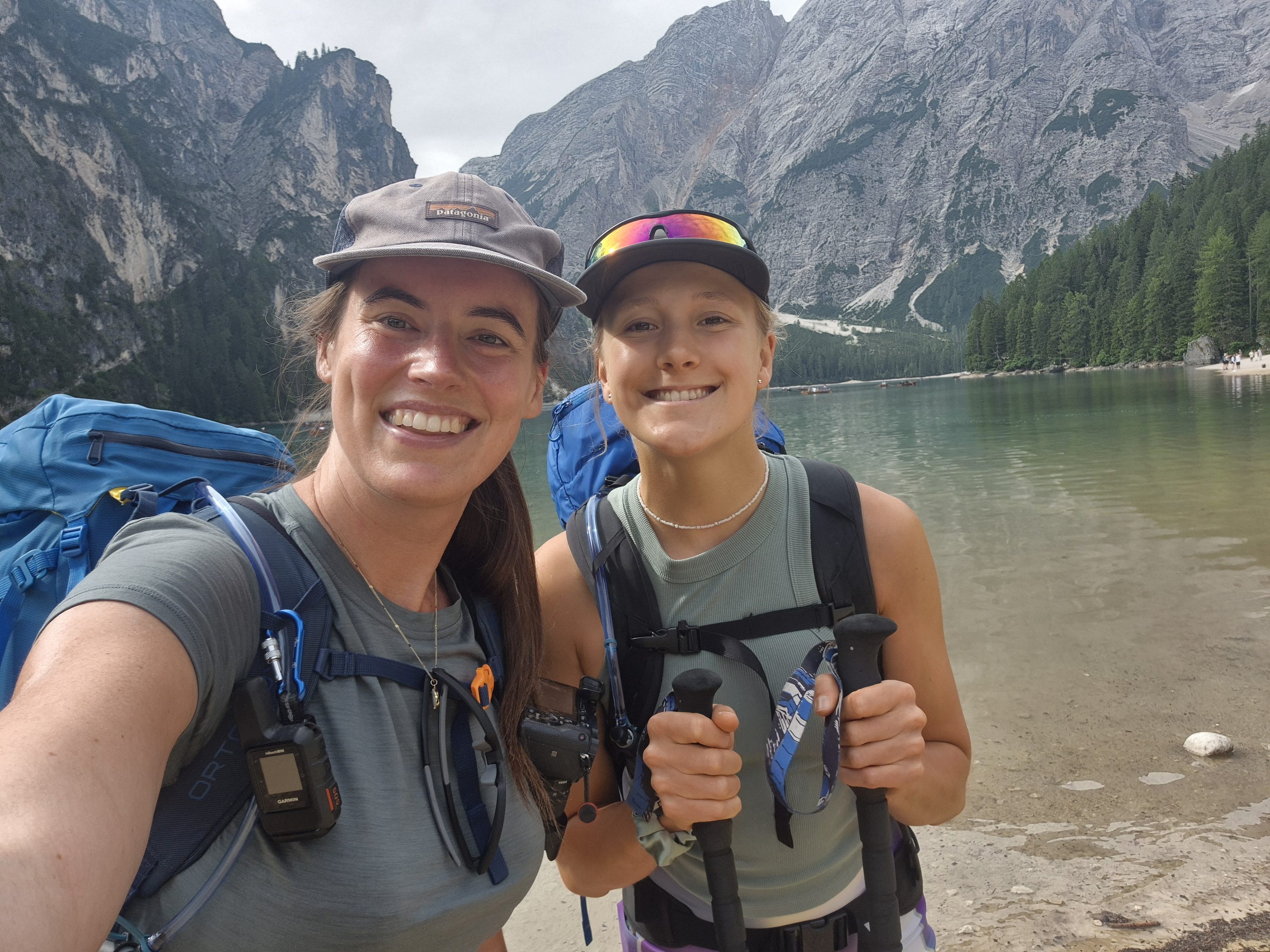
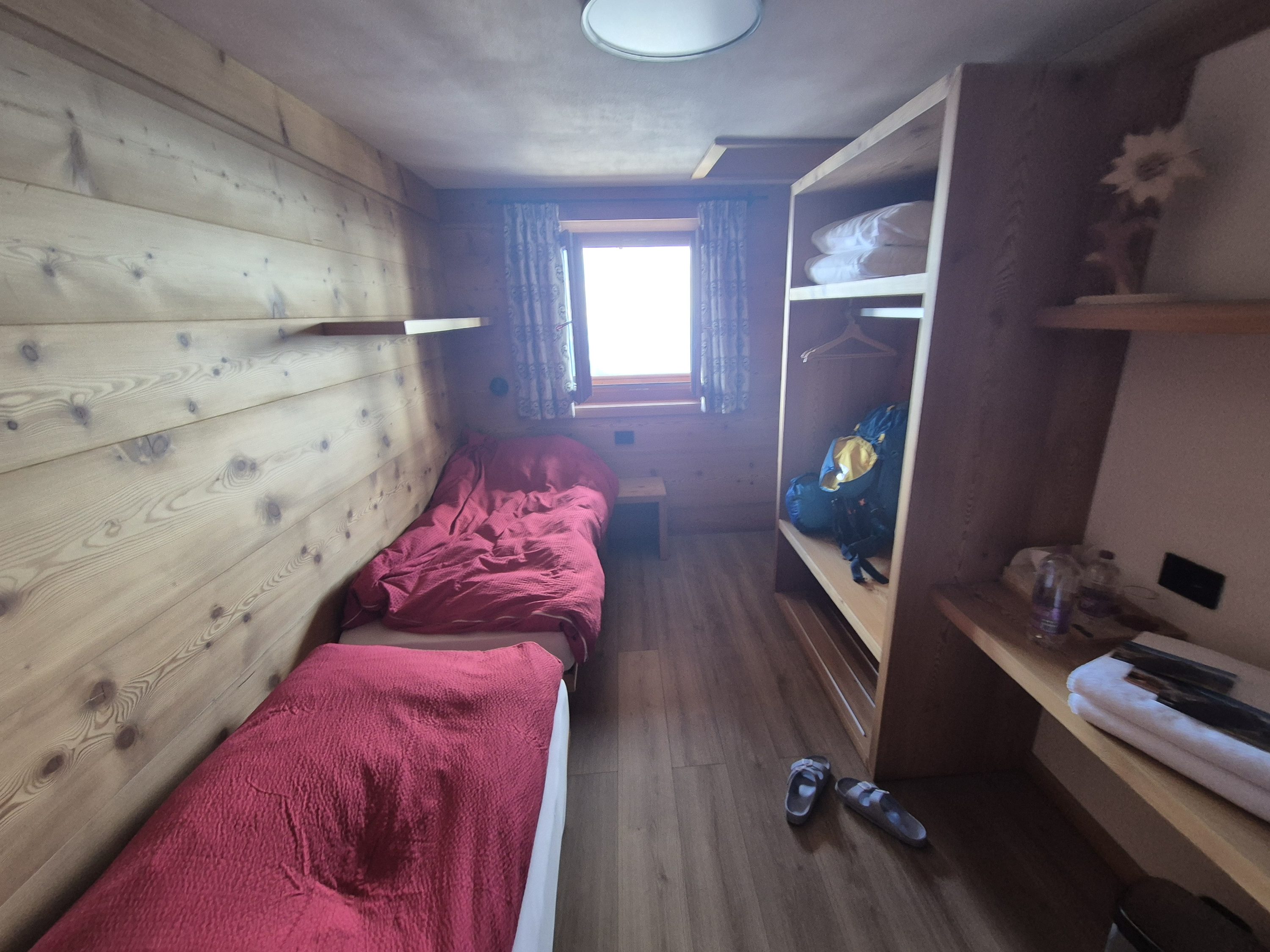
We start with a train journey to Toblach and, because every good trip in Italy should begin with pizza and gelato, that is exactly what we do. The next morning the trail starts at famous Lago di Braies. Yes, it is busy. The water is also an almost ridiculous Gatorade blue and, once you walk around the lake and start climbing, the crowds disappear surprisingly quickly. The first ascent through the Ofental – the “oven valley” – is a brutal warm-up, but the views back to Lago di Braies make it worthwhile. We reach the first hut seconds before a biblical thunderstorm, shelter with hot chocolate, then continue once the sky clears. Our night ends at a wonderfully comfortable mountain hut with a three-course dinner, cosy rooms and even rainfall showers. Not a bad first day.
Day 2: When the Dolomites weather changes the via ferrata plan
We had a long, medium-difficulty via ferrata planned, but the weather had other ideas. Thunderstorms are a regular part of summer mountain weather in the Dolomites, and being clipped to a long metal cable is not where you want to be when one arrives. So we change the plan. Instead, we climb Col Bechei, stop for lunch at a farm and continue to our next hut. This became one of the themes of the trip: the route gives you options, but being self-guided means having the judgement to use them.
Day 3: Lagazuoi, World War I tunnels and the Kaiserjäger route
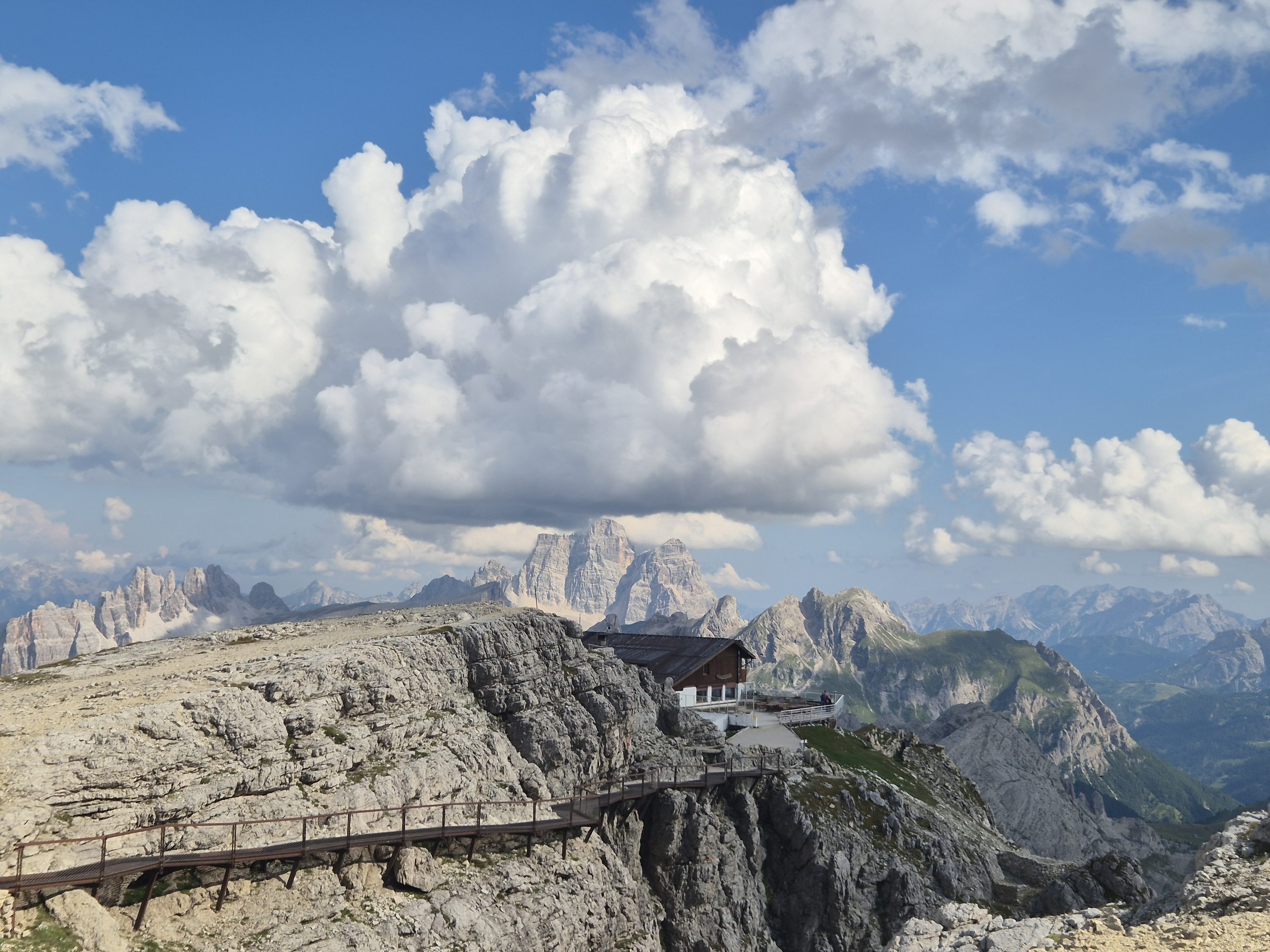
After a generous breakfast, we climb steadily through an almost lunar landscape to one of the most dramatically situated rifugios on the whole route. We are staying for two nights, which means we get the rare pleasure of seeing this normally busy place in the quiet of early morning and evening.
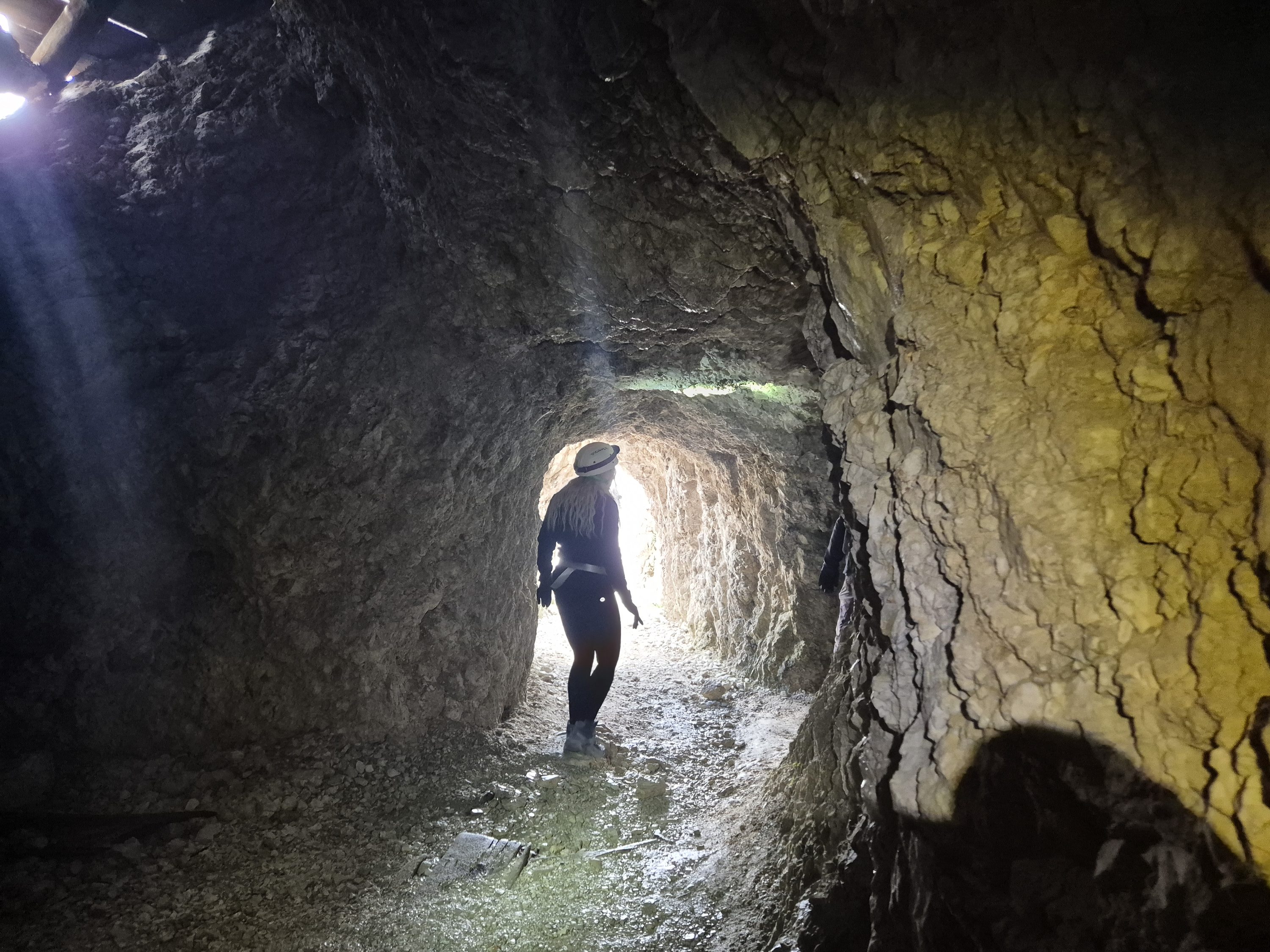
After coffee, we explore the extensive World War I tunnel system around Mount Lagazuoi. Walking through the mountain, helmet on, it is difficult to imagine the conditions soldiers endured here. The Dolomites are extraordinarily beautiful, but this landscape was once a front line. Experiencing the military history in the actual terrain gives the Alta Via 1 a depth that is easy to miss if you rush through.
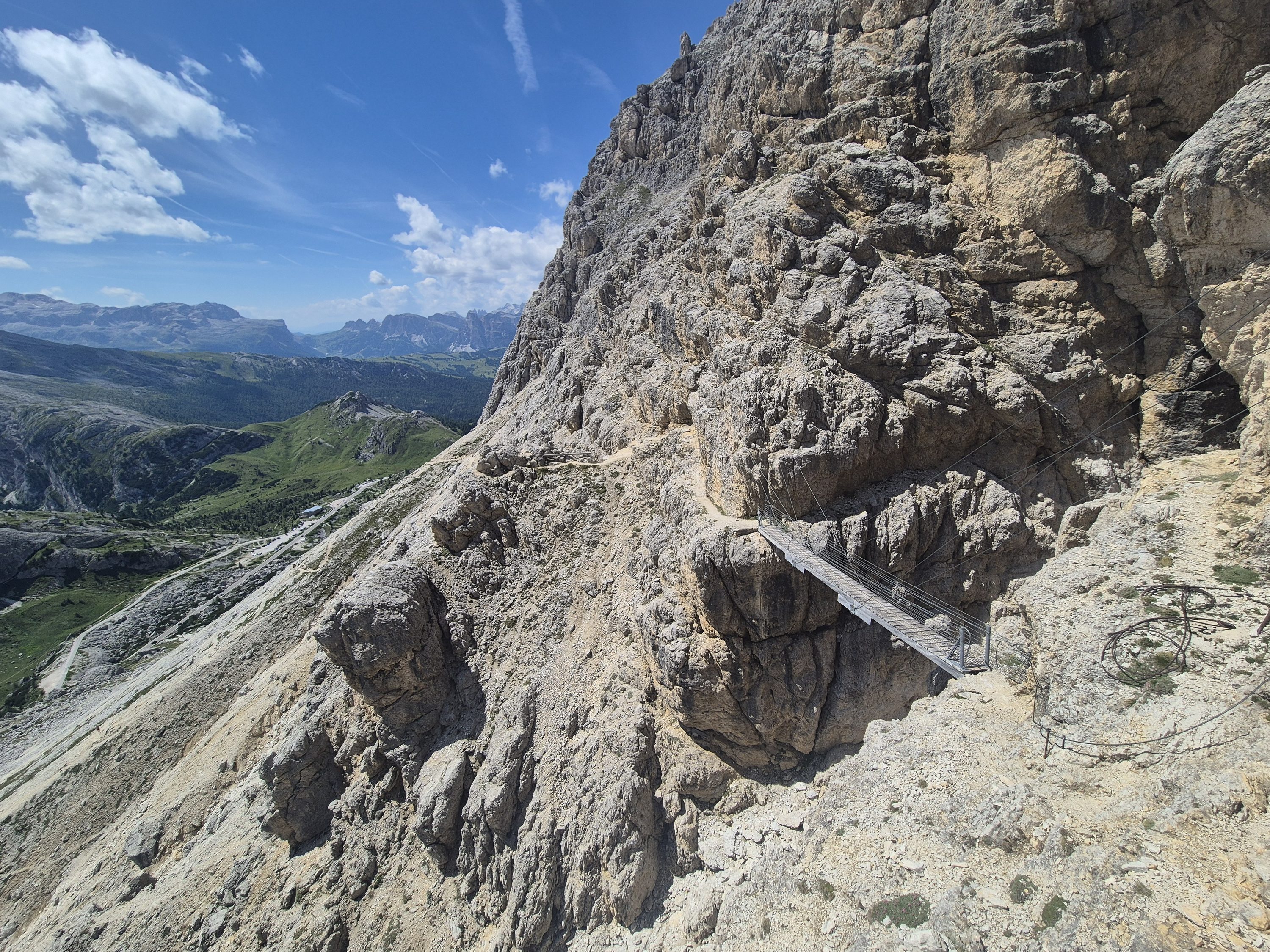
We return via the Kaiserjägersteig, an easier protected route with an impressive suspension bridge and strong links to the wartime history of Lagazuoi. It is a brilliant combination of scenery, history and via ferrata-style terrain.
Day 4: A big via ferrata day that did not happen
This was supposed to be our biggest technical day, with a long and difficult optional via ferrata to a nearby summit. I had been looking forward to it enormously. Then I got sick overnight, and the forecast was calling for thunderstorms anyway. I stayed in the hut while Anna chose a shorter via ferrata nearby. It was a useful reminder that a good mountain itinerary is not one you follow blindly. Sometimes the correct decision is to do less.
Day 5: Via Ferrata Averau and views across the Dolomites
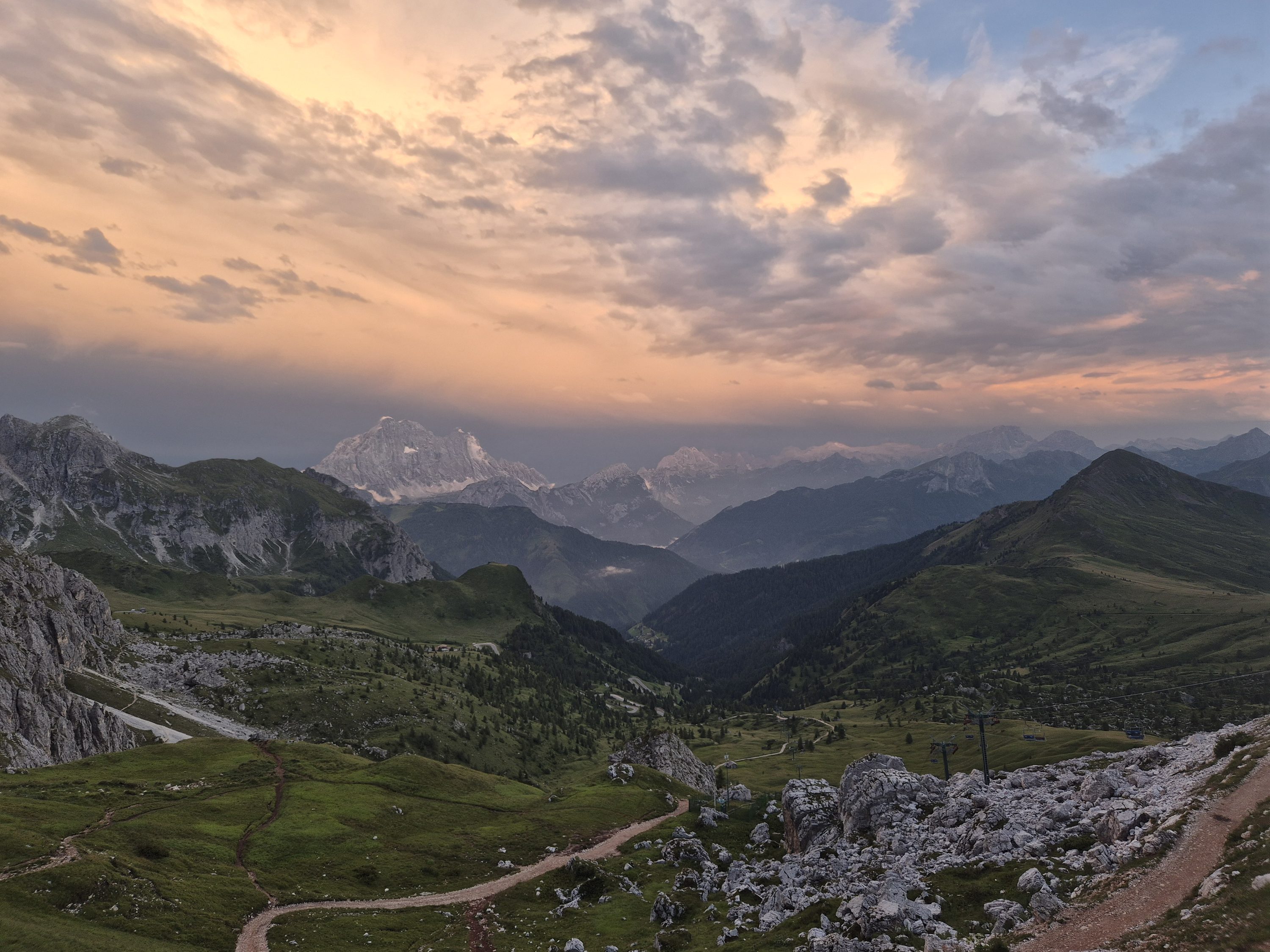
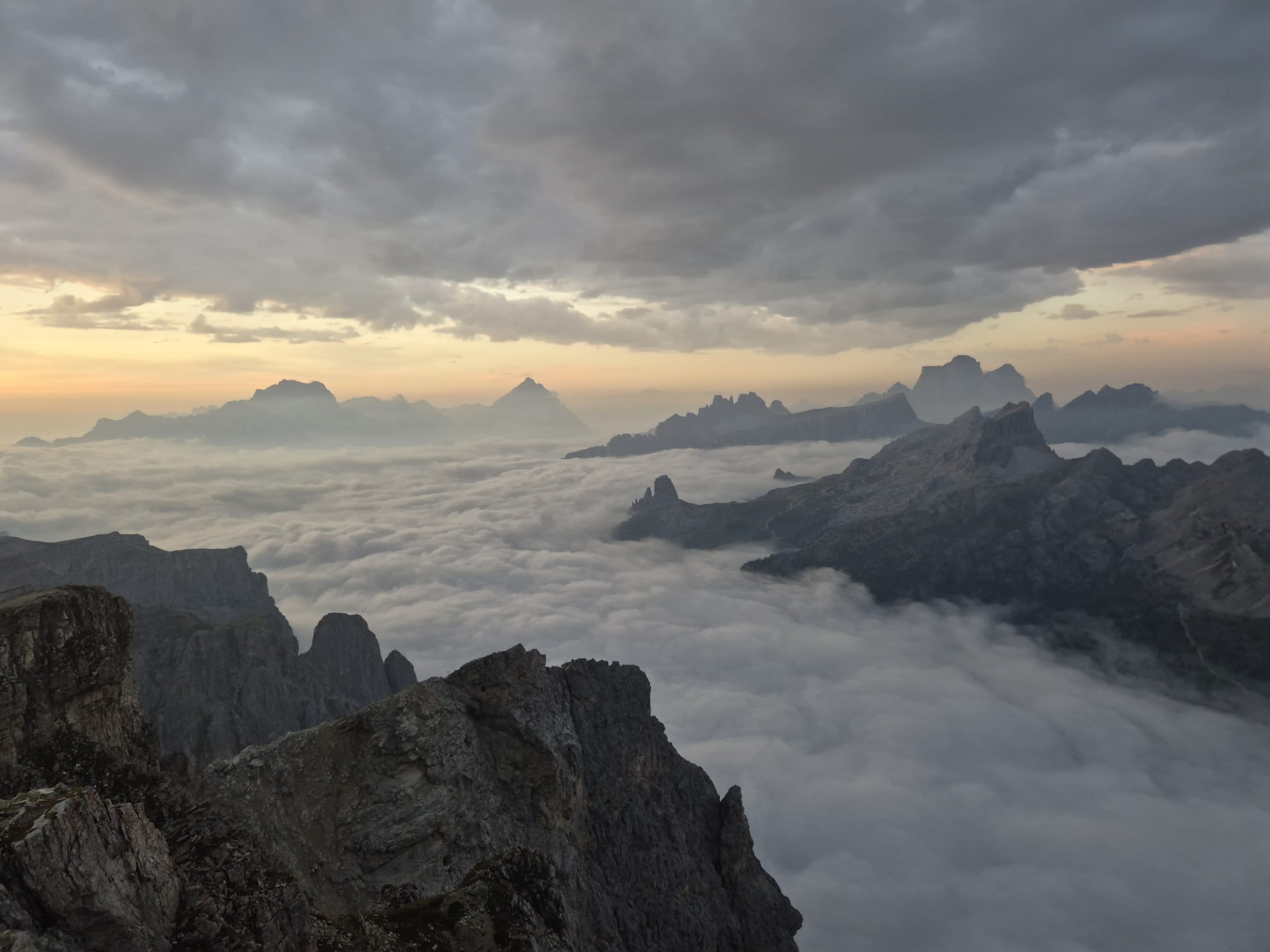
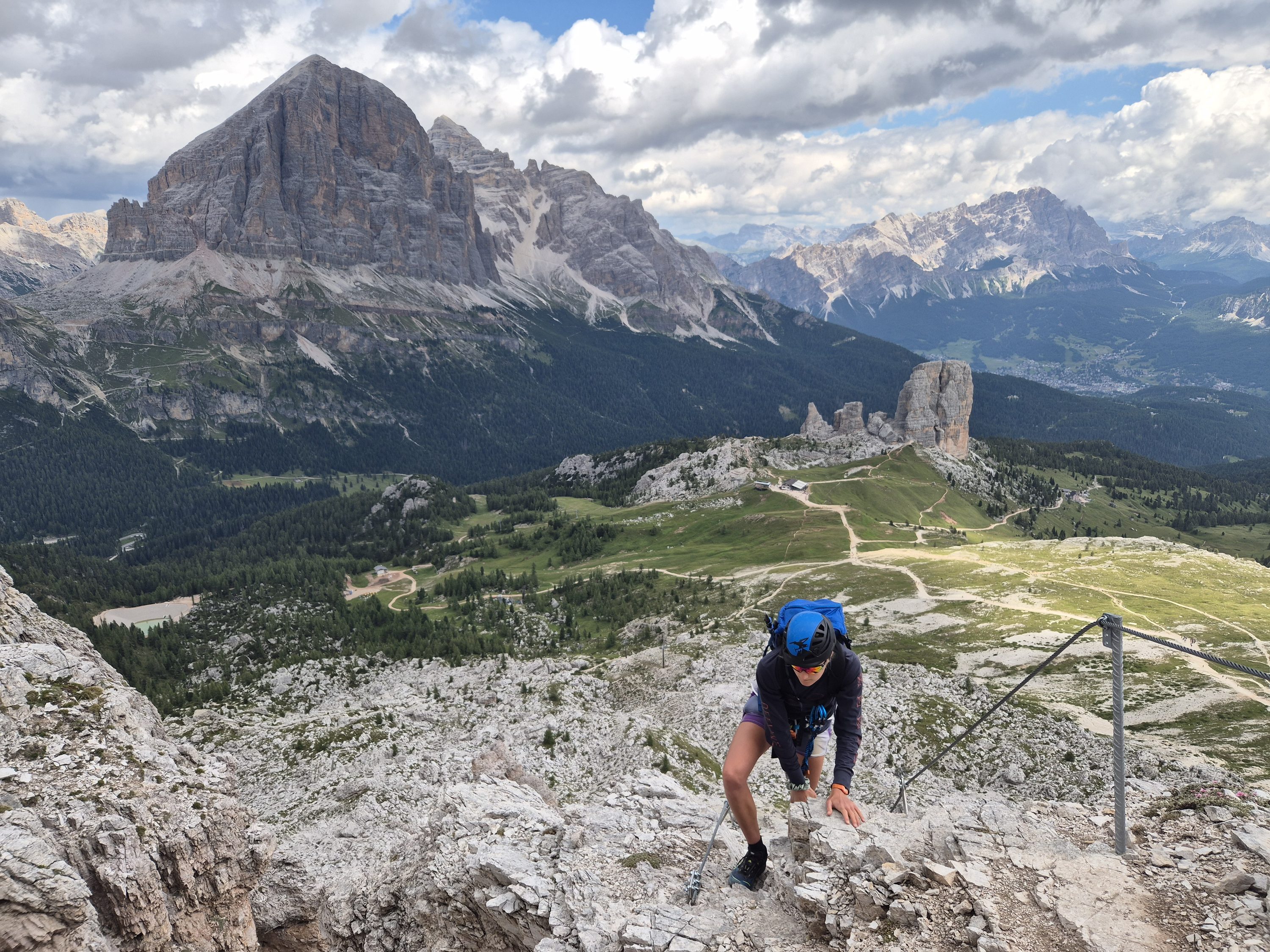
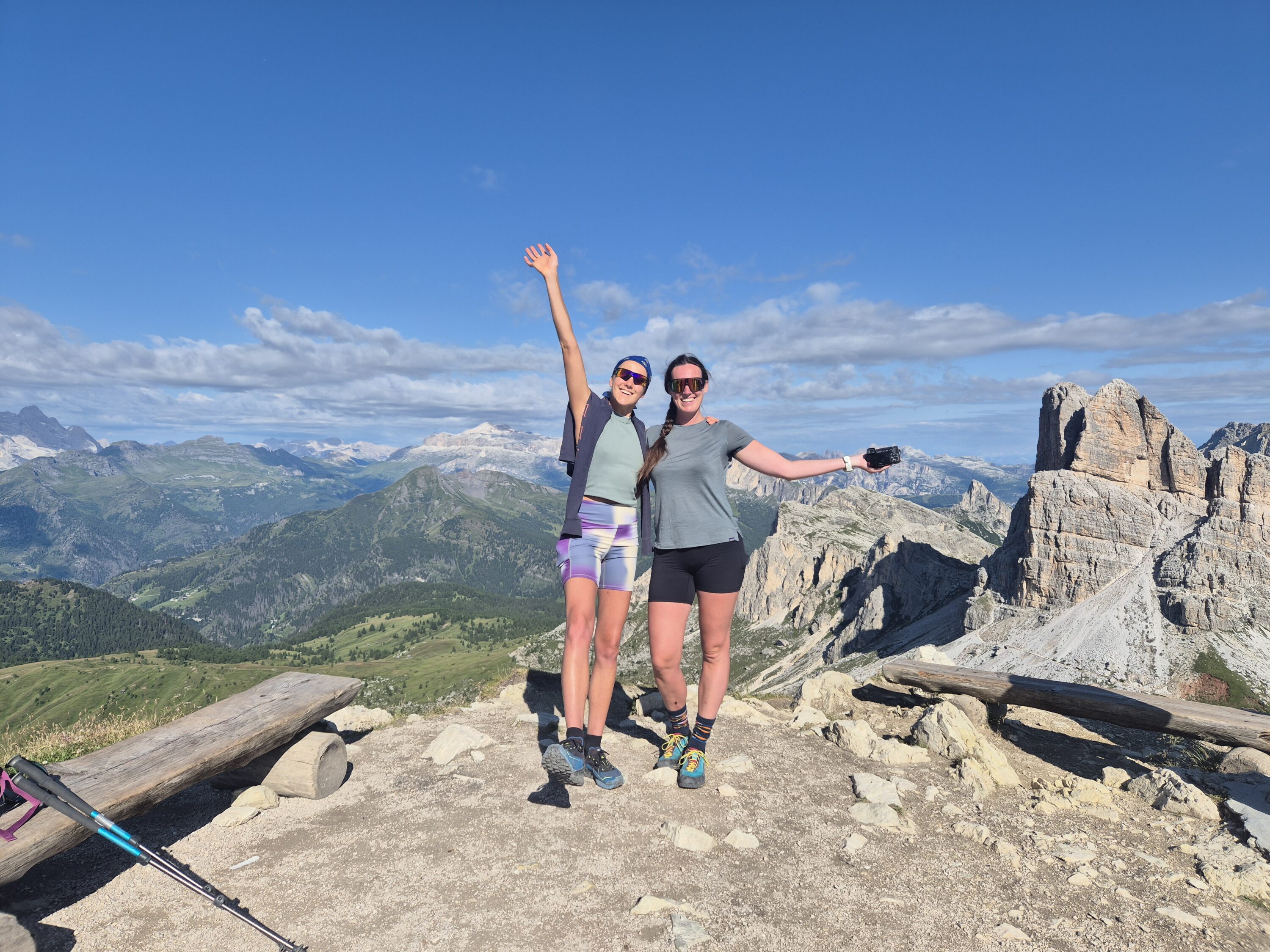
After an incredible sunset at Lagazuoi, we continue toward Rifugio Averau and climb Monte Averau via its moderate via ferrata. From the summit the view opens across many of the most recognisable mountains in the Dolomites, including the Marmolada and the distant Drei Zinnen / Tre Cime di Lavaredo.
The contrast is classic Dolomites: exposed rock and cables on the mountain, then an extremely comfortable rifugio afterwards. Ours even has a guest laundry. I hang my clothes from the balcony, fall asleep, wake to a storm and discover one T-shirt has blown onto the roof below. Thankfully the hut warden and her children rescue it. Technical climbing: successful. Laundry management: less successful.
Day 6: An easy protected descent, Passo Giau and one of the prettiest AV1 stages
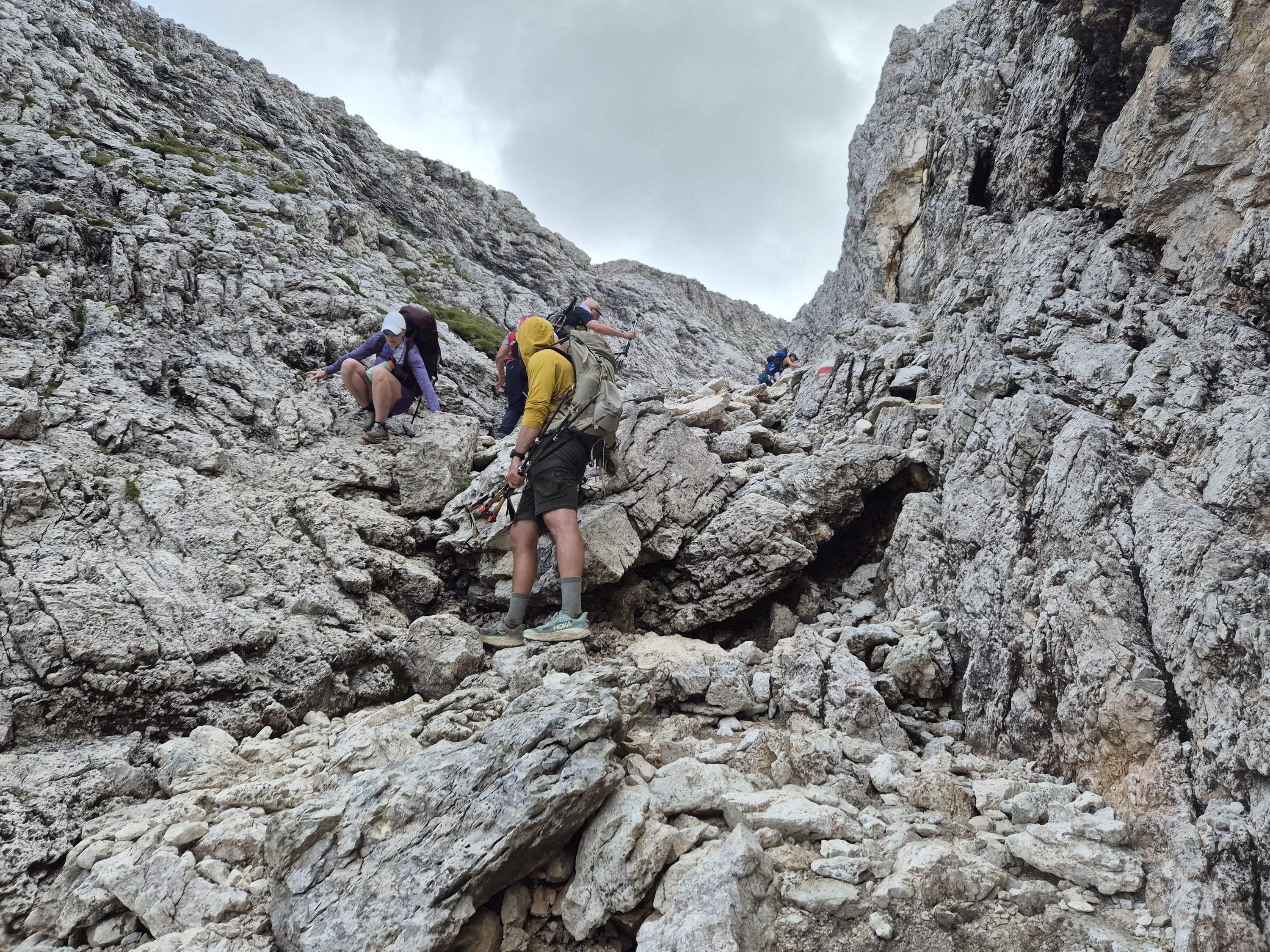
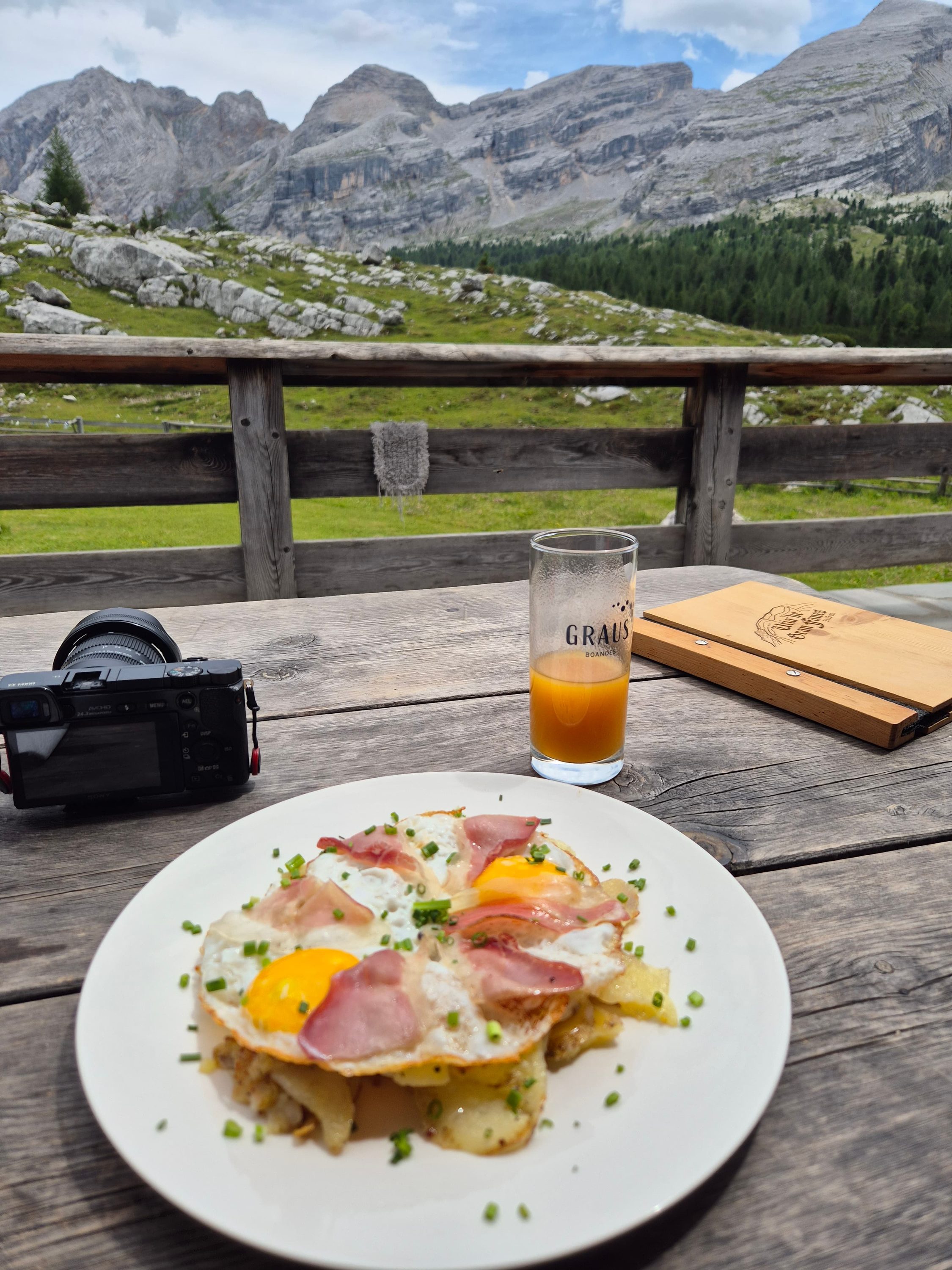
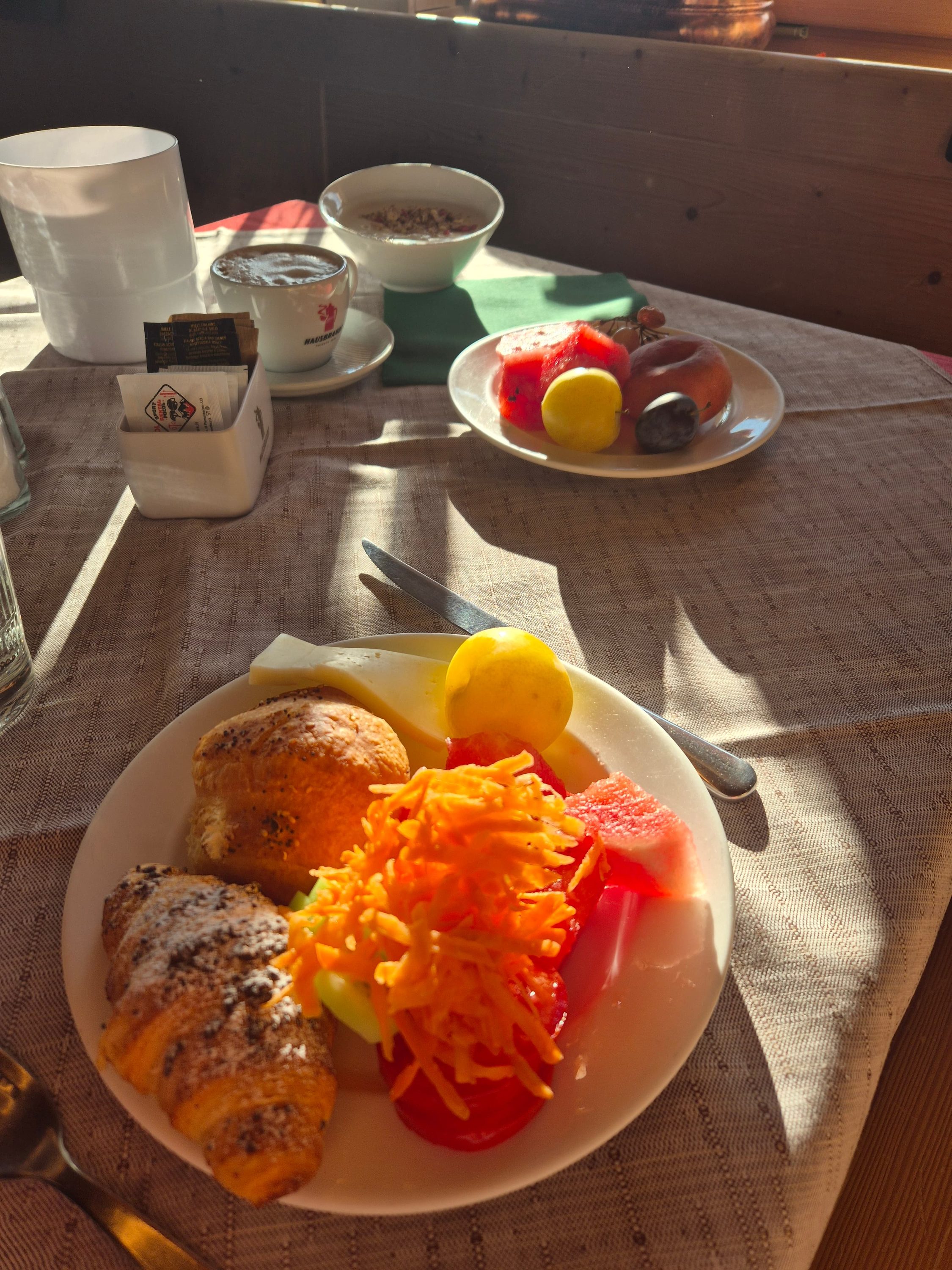
Breakfast includes watermelon, which already makes this an excellent morning. We follow the ridge and descend an easier protected section toward Passo Giau. The pass is busy with road traffic and motorcyclists, so we do not linger. Beyond it comes one of my favourite parts of the entire Alta Via 1: grassy cirques and plateaus, wildflowers, wild horses and huge views. Rain follows us for much of the day, but it somehow does not make the landscape less beautiful. At the hut we finish with a walk around the lake and a session in a wood-fired barrel sauna – where, completely by chance, I meet two Alpenventures customers.
Day 7: Beneath Monte Pelmo
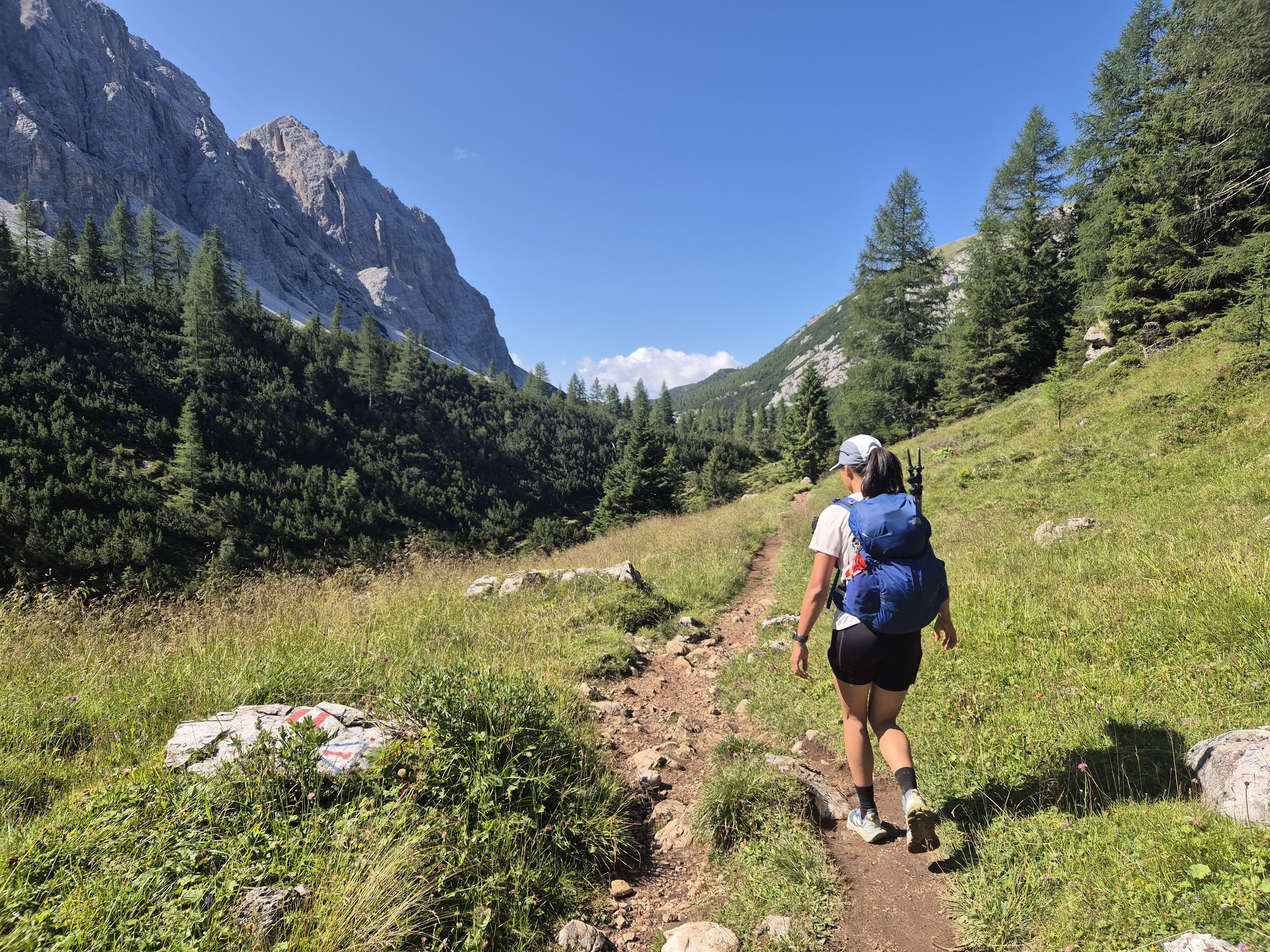
This is a relatively short hiking day around the base of enormous Monte Pelmo. I stop for lunch directly beneath its cliffs and spend a lot of time looking up. One thing the Dolomites constantly remind you of is that there is rarely an easy route to a summit. Even the normal route on Pelmo involves serious exposed terrain. Today, though, we stay low and enjoy the scale of it from below.
Day 8: A valley reset, edelweiss and another weather decision
After a night recovering in a valley hotel, it is only a couple of hours back up to the next rifugio. Our room has an incredible view and we spend time watching the landscape change from sunshine to storm to rainbows. We make a short attempt toward a nearby peak, then turn around when the sky becomes too angry and windy. The consolation prize is a patch of rare edelweiss on the way back.
Day 9: Into the quieter southern Dolomites
The atmosphere changes as we move south. The busy northern resorts begin to fall away, the terrain becomes quieter, and the route traverses rocky slopes, forest and increasingly remote mountain country. A hut tucked deep inside a cirque becomes one of my favourite locations of the trip. The chef has a pastry background – naturally, I am professionally obliged to investigate – and the hut warden has created a beautiful alpine herb garden beside the building.
Eventually we have to leave. A long traverse takes us toward our farmstay for the night. This feels like the wild side of the Dolomites: fewer roads, fewer lifts, fewer people and a lot more silence.
Day 10: Deeper into the mountains
The route rolls through scree and sparse forest before climbing to a hut for lunch, crossing another pass and descending into steep meadows. I spot deer and mountain goats on the way. Our hut sits at the head of a deep valley, with dormitories in converted barns. The supply cable car had tragically burned down after the previous season, but the hut host Elena and her team still manage to produce a warm welcome and a proper dinner despite the extra logistical challenge. These are the places that make hut-to-hut hiking feel personal.
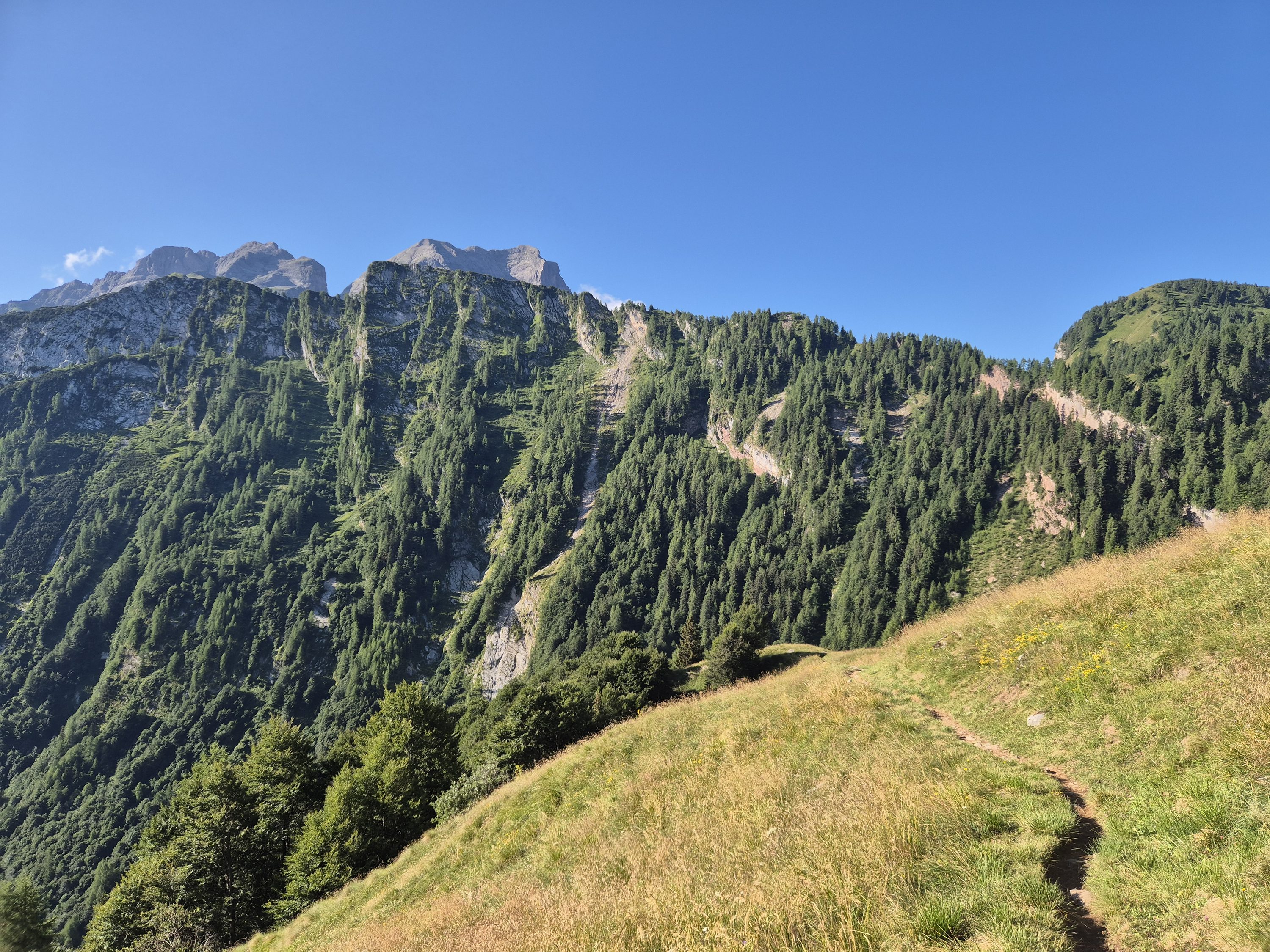
Day 11: The wild finale – via ferrata toward Belluno
About an hour into the day we reach a fork. Most Alta Via 1 hikers turn toward the valley and finish near the road. We go straight on toward Belluno.
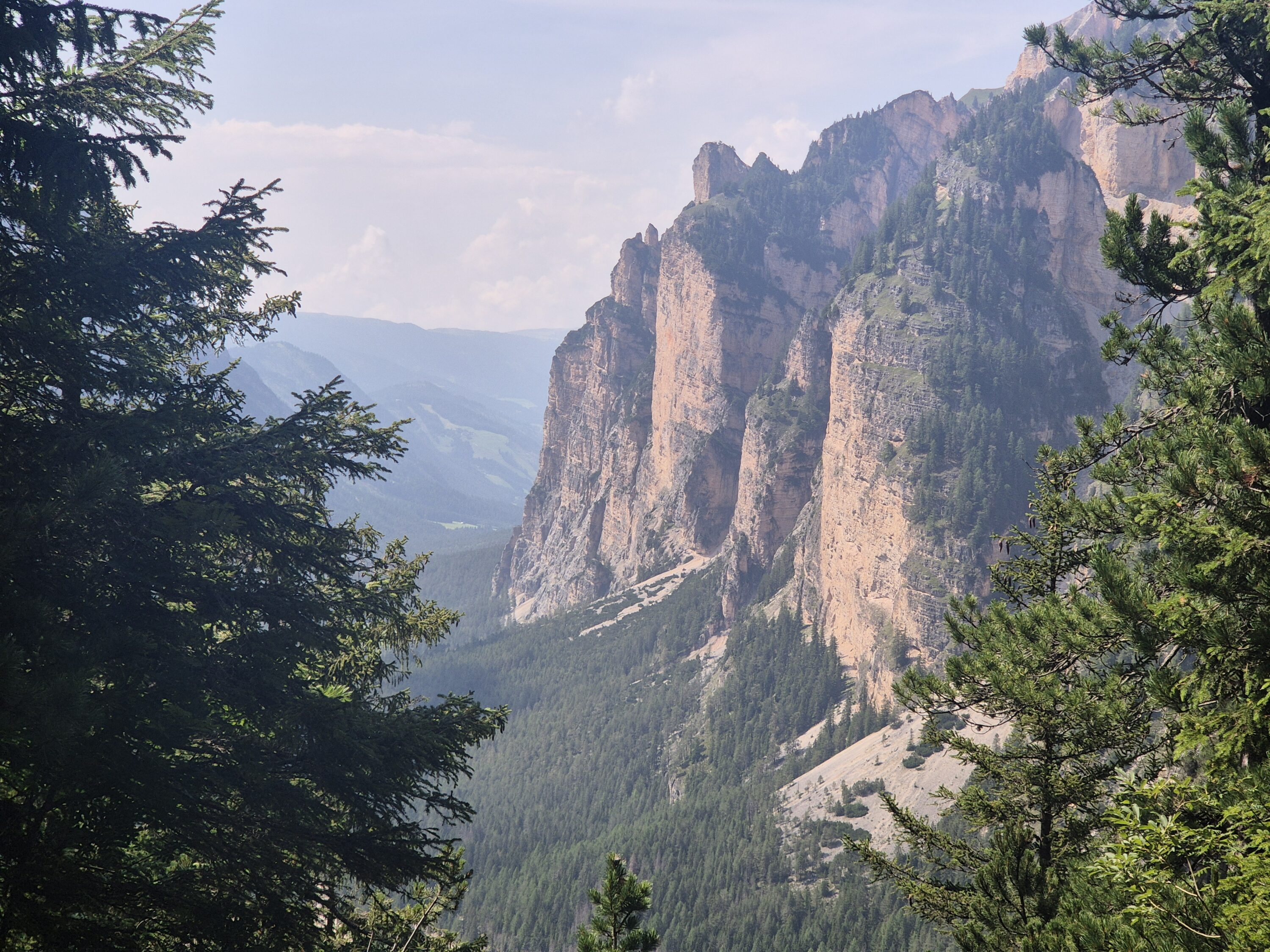
The difference is immediate. Forest and meadows lead into a cirque below the highest pass of the day. The lower climb is straightforward, then the terrain becomes more hands-on, preparing us for the long protected descent toward our final hut. Mist drifts around the rock and, after the busy central AV1, the solitude feels almost unreal. I do not see another hiker or climber between the junction and the hut.
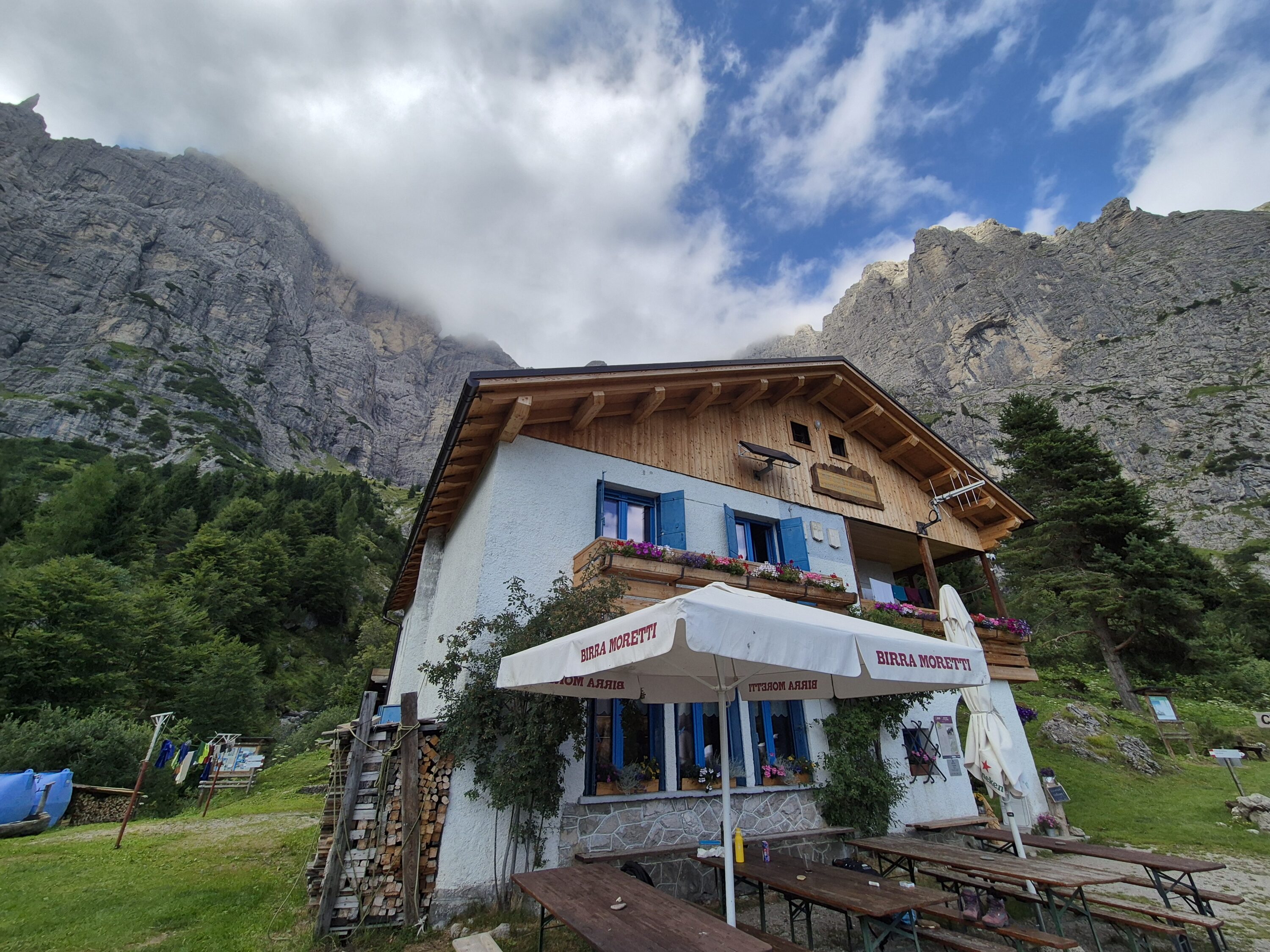
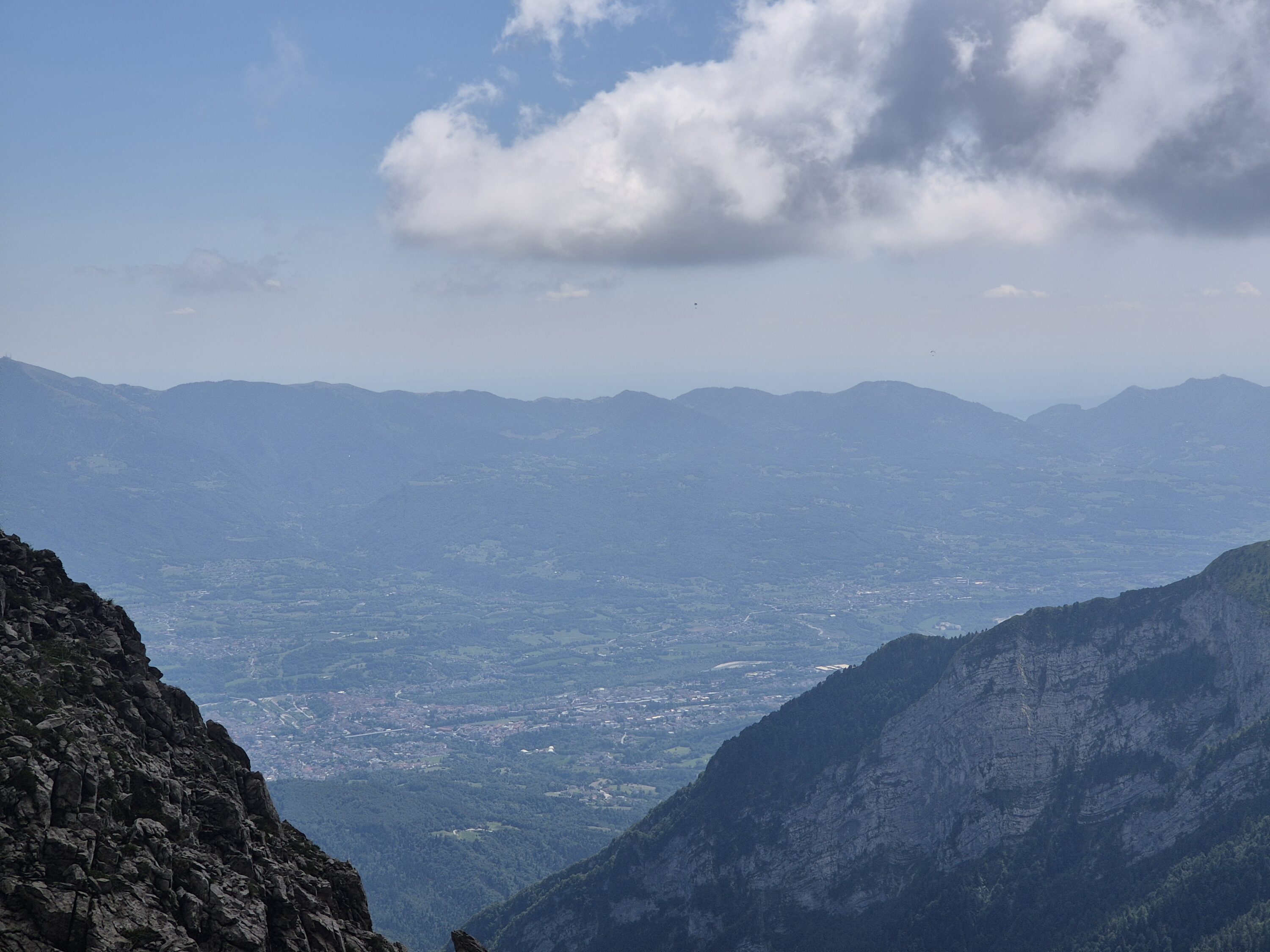
This southern terrain feels properly alpine despite its moderate elevation: huge rock walls, exposed bands and long cable-protected passages winding through the mountain. In the distance we can already see Belluno. A small red emergency shelter sits high on the route, and below it our final rifugio has exactly the character you hope for from a climbers’ hut: rustic, slightly eccentric, full of interesting people and run by cheerful wardens. Dinner is polenta, fried mountain cheese and cabbage salad. After a day like this, it is perfect.
Day 12: Walking all the way to Belluno
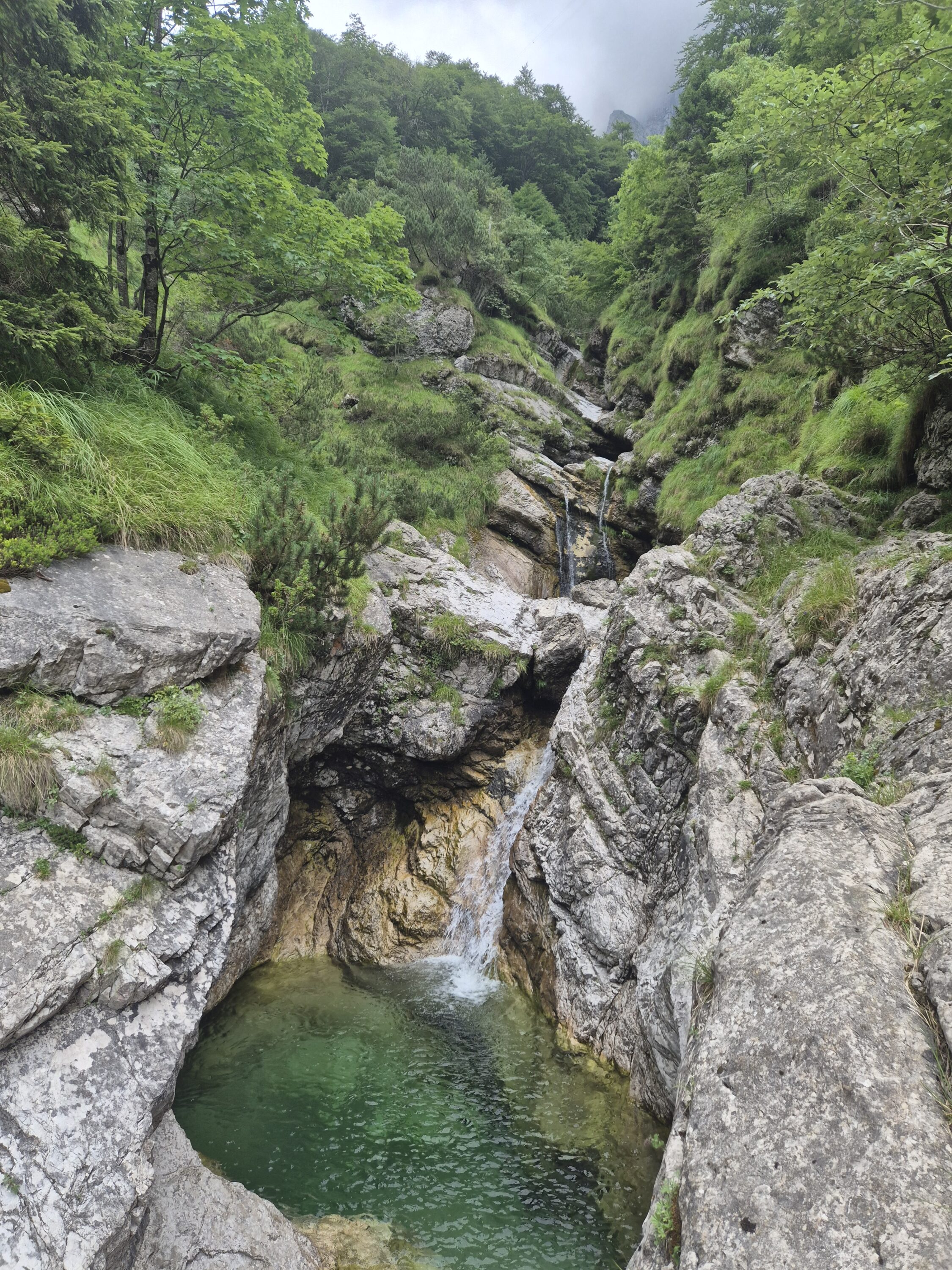
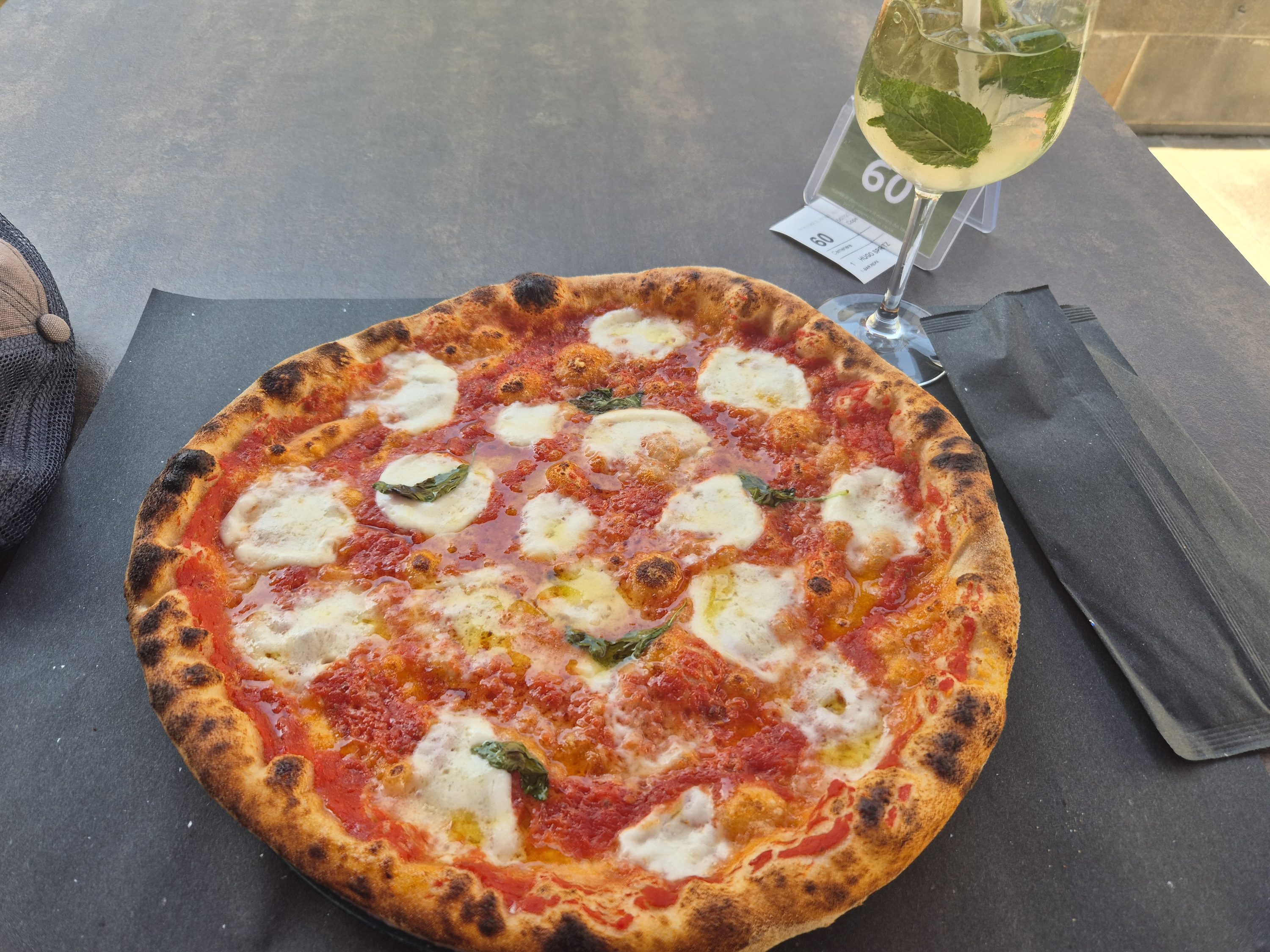
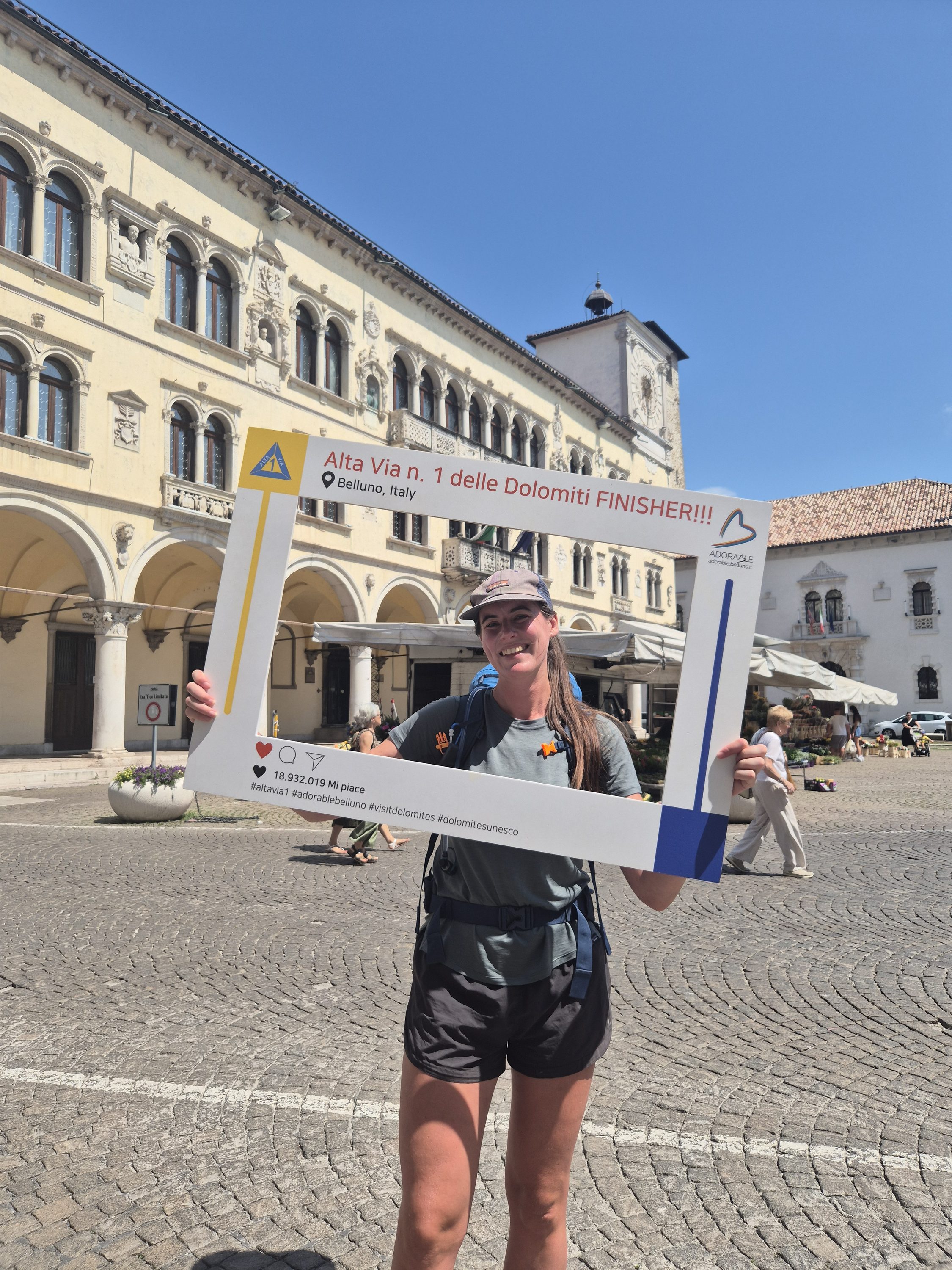
The final descent is mainly through forest, broken up by cascading pools and waterfalls. I start the morning with a quick cold plunge and, as we lose elevation, the landscape becomes increasingly Mediterranean. It is a long walk, although part can be shortened by bus. In Belluno I collect my AV1 finisher pin at the tourist office, take the obligatory finish photo and, of course, find pizza. The trip began with pizza, so there was really only one acceptable way for it to end.
Who is this self-guided Dolomites via ferrata trip for?
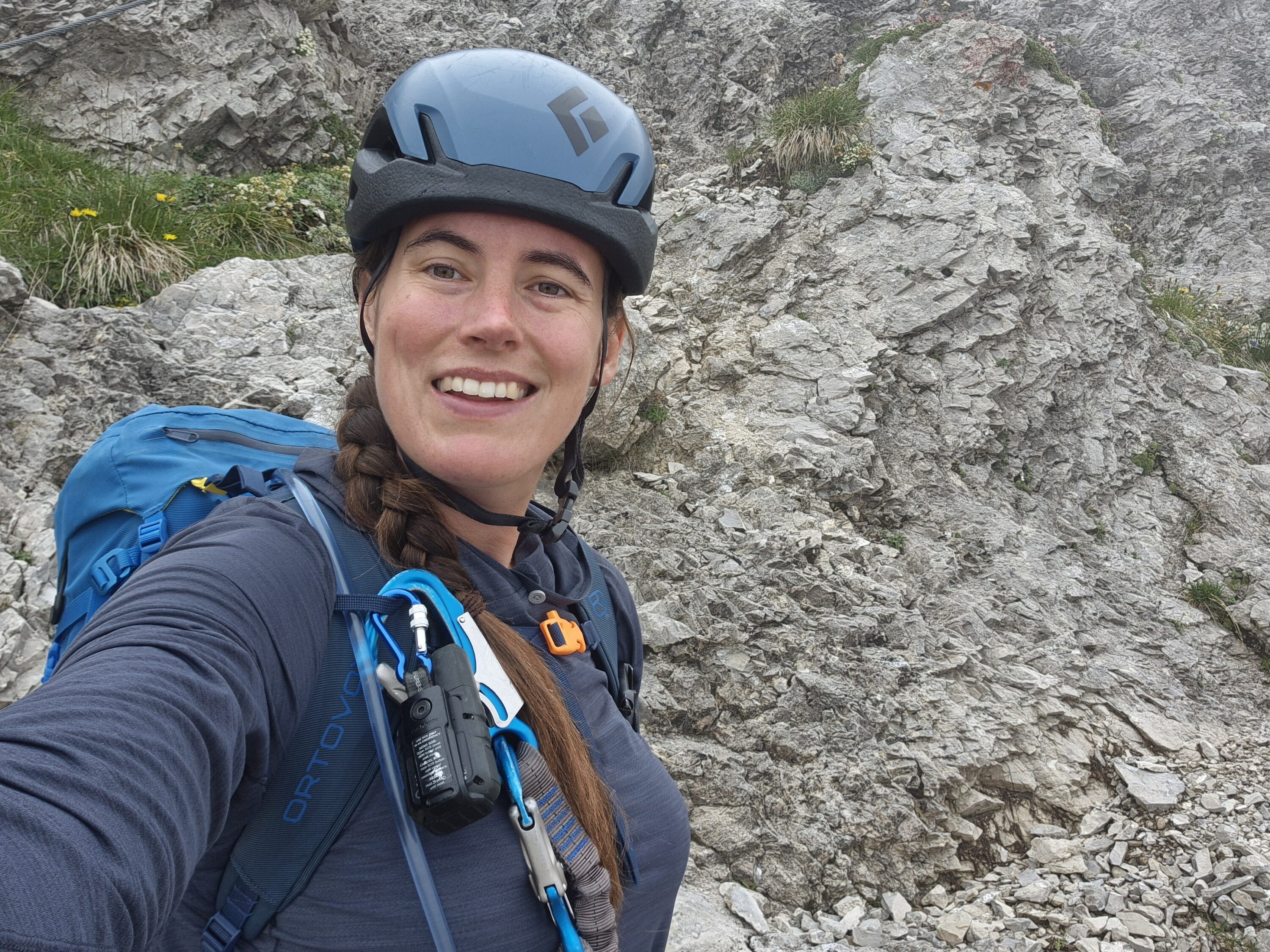
This is not an introduction to via ferrata. It is best suited to fit, experienced hikers with a good head for heights and previous via ferrata and/or alpine rock-climbing experience. You need to be able to manage long mountain days, use the required equipment correctly, navigate independently and adapt your plans when the weather or conditions demand it.
For hikers who want the classic AV1 without technical climbing, our standard self-guided Alta Via 1 itineraries bypass the via ferratas. The VF4 version is for people who specifically want to combine hut-to-hut hiking with protected climbing routes and more adventurous variations.
Related: Compare our standard Alta Via 1 self-guided itineraries or browse self-guided via ferrata tours
If you are ready to look at the route: See the Alta Via 1 with Via Ferratas (VF4) itinerary, skills requirements and availability.