The Alta Via
8 self-guided is one of the most varied hut-to-hut hikes in the Dolomites.
Often referred to as the Western Dolomites Traverse, this self-guided route
crosses the mountains from north to south, from above Brixen-Bressanone to
Salorno-Salurn, linking together an exceptional range of landscapes in a single
journey.
From the
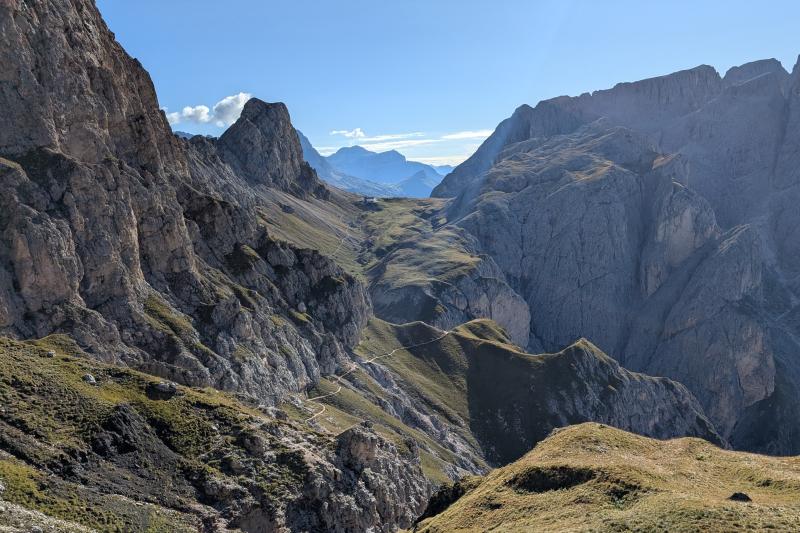
jagged limestone walls of the Odle–Geisler Group to the open meadows of the
Seiser Alm (Alpe di Suisi), and from the dramatic Rosengarten to the forests,
vineyards, and orchards of the south, few Dolomites hut-to-hut treks combine
such different landscapes so seamlessly.
Early
highlights include the Adolf Munkel Trail beneath the Odle peaks and the Seceda
ridgeline, with the option to reach one of the Dolomites’ most photographed
viewpoints. After descending into Val Gardena, the route crosses the Seiser Alm
(Alpe di Siusi), the largest high-altitude alpine meadow in Europe, where broad
pastures and expansive views create a striking contrast to the more rugged
alpine terrain.
The
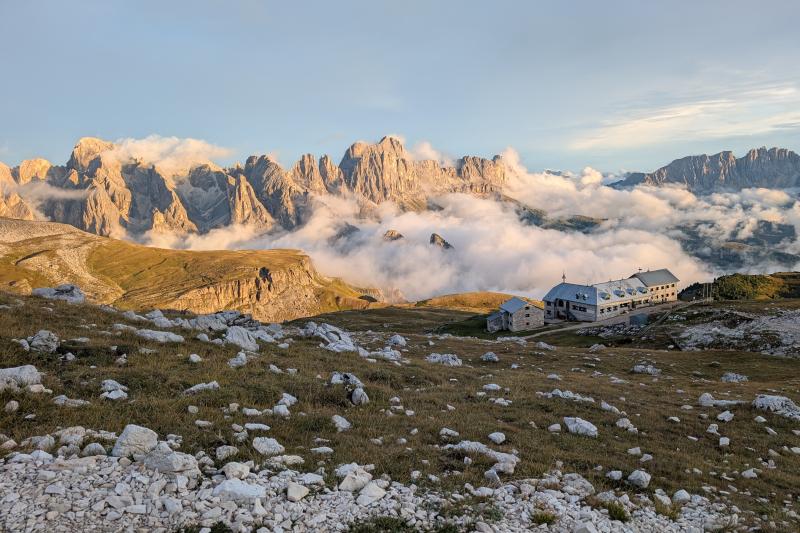
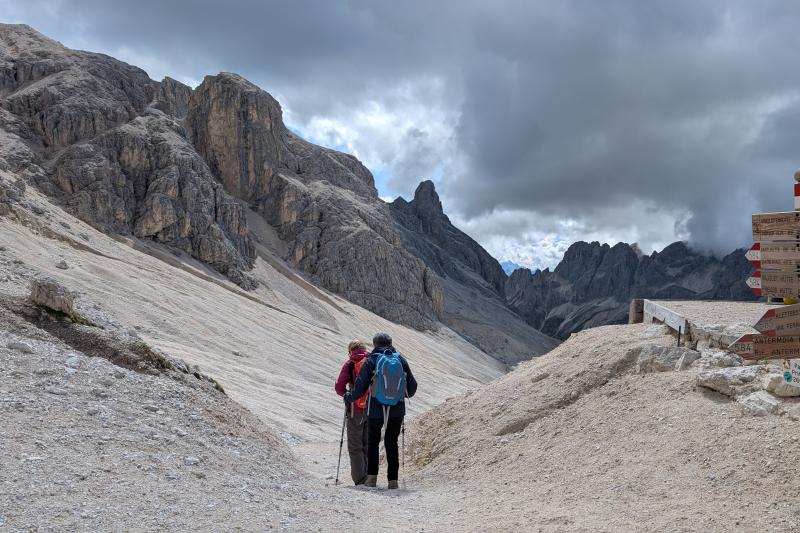
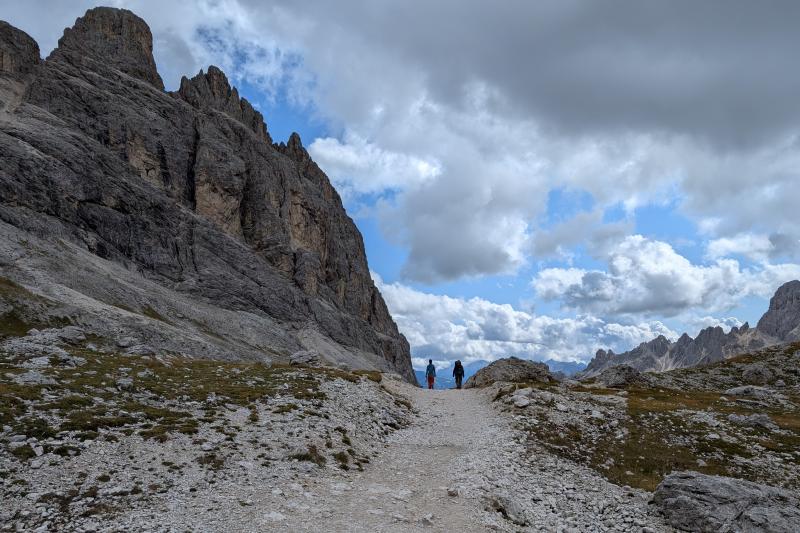
character changes again in the Rosengarten, where scree slopes, high passes,
and a short cable-secured section give the route a more serious feel without
entering truly technical terrain. Beyond this, the trail winds through the
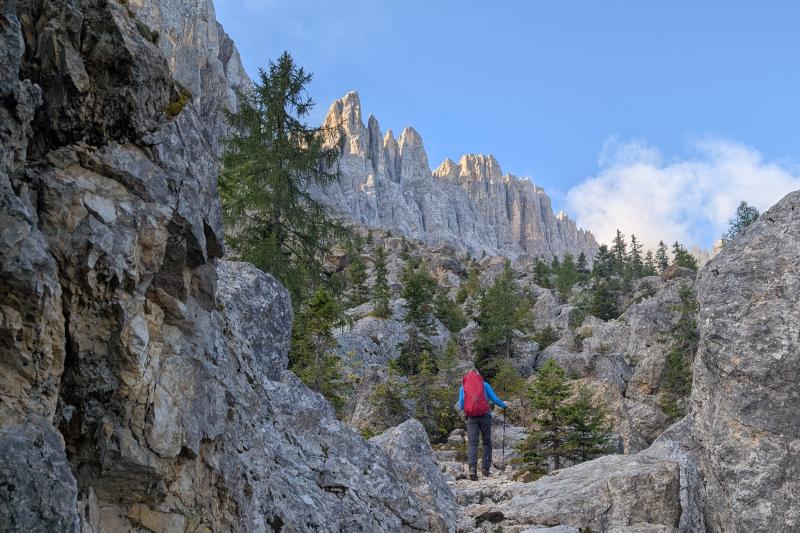
boulders of the Labyrinth Trail below Latemar before leading to a comfortable
spa hotel, an ideal place to recover after the toughest stages. The final days
are quieter and more reflective, passing through Trudner Horn Nature Park
before descending into the Adige–Etsch Valley.
Our
itinerary avoids the most technical variants of Alta Via 8 while still
retaining a sense of challenge. A short cable-secured exposed section, with no
special equipment required, and a steep scree descent remain unavoidable,
unless you choose to completely avoid the Rosengarten section*. This tour is
best suited to fit hikers who are comfortable on alpine trails and want a
self-guided Dolomites traverse with outstanding variety. As on our other tours,
we take care of the complex logistics and support you with a custom eGuidebook
and offline navigation app, so you can feel well prepared and focus on the
hiking.
*It is possible
to bypass the challenging Rosengarten section on the full itinerary via an
optional Add-on. The north itinerary leaves the trail before reaching the
Rosengarten.
A note on the Alta Via 8:
There are two routes commonly referred to as Alta Via 8. The official “Alta Via
degli Eroi” (Path of Heroes) begins further south near Feltre and is a shorter,
separate route. The itinerary described here—often called the Western Dolomites
Traverse—is an extended north–south crossing along the western edge of the
Dolomites, running from Brixen–Bressanone to Salorno–Salurn.
The
terrain in the Dolomites is rugged. Every year, we have customers who
are surprised and unprepared for the challenges presented by this rugged
terrain. Read our Blog post on Trekking in the Dolomites for more information to help you decide if trekking in the Dolomites is right for you.